School Pictures 2008
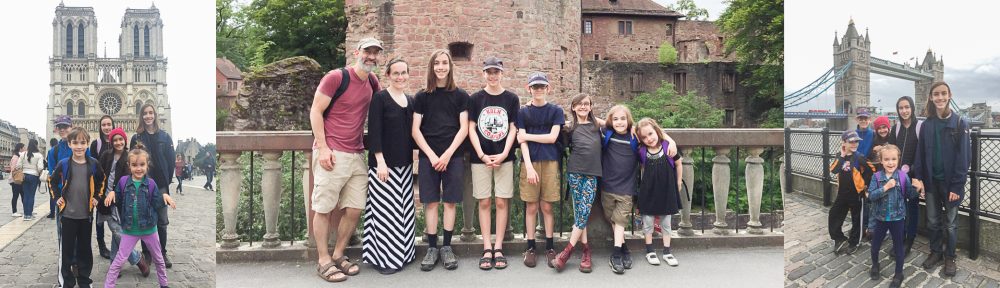
November 25th, 2008 by heidiMom got pictures of the older two for their “school year” but we got some of all the kids. These are the funny shots, we’ll post the real ones later.


“Organize yourself; prepare every needful thing; and establish a house, even a house of prayer, a house of fasting, a house of faith, a house of learning, a house of glory, a house of order, a house of God.” Doctrine & Covenants 88:119
Mom got pictures of the older two for their “school year” but we got some of all the kids. These are the funny shots, we’ll post the real ones later.


We’re finishing up Christopher’s second year with First Language Lessons for the Well Trained Mind and today he read this paragraph and told me what every single word was with only a tiny bit of vague prompting from me! Go, Christopher! I could not have done this personally before we went through this book, I didn’t remember what the helping verbs were! Or conjunctions! I had no idea what the definition of a preposition was, let alone had the list memorized like C does. We have both learned a lot over the last two years we’ve done this book. It’s a good thing I’m homeschooling these kids, my education needs some gaps filled.
Robin Hod crept carefully through the forest. He was looking for a rich traveller with much gold. Robin Hood could take this gold, and give it to an old, poor woman. The old woman would thank him and weep with joy. “Oh!” she would say. “I am a happy woman!”
Okay, so the writing isn’t exactly thrilling but the fact that he could identify every word, even the articles, was very thrilling.
From email discussion with friend:
I can give you my random thoughts of things we’re trying. Our current struggle is how easily distracted Christopher gets when he’s doing anything at all - lessons, washing hands, chores, whatever. SO distractible.
Yoga. I’m looking for the Yoga Kid movies Becky brought over one day. Physically asking them to hold still and focus and practice breathing. Requires patience.
Puzzles with more and more complex pieces, we got C one at the dollar store of the US. Requiring him to keep working at something after he may be distracted by other things. But his desire to see closure is hopefully stronger than his tendency to get distracted…
Writing letters to pen pals or family. C gets impatient that he cannot write as quickly as his thoughts but if he’s writing to someone he’s more motivated to stick it out.
Chapter books, drawing their attention over several days/weeks. We had to find something that would really engage his attention and then stop reading even when he begged for more.
We limited how much we would read of that book per day - we would read others, of course, but had to stop the one. Delayed gratification.
We’ve found that since moving the TV back out (we hide it in the garage) they are ALL focusing more on whatever project and have better attention spans.
C is use to grasping concepts quickly and if he doesn’t, he tends to throw his hands up and get frustrated. I’ll usually try at least one other approach and then we stop for the time being with the understanding that we WILL return to this after a brief break. Sometimes Kit can explain in a way that Christopher quickly gets, so a new teacher or tactic can help. We always try to return to it that day but it may be after I tell him to go play in the yard for a few minutes or give him something to try like working on lesson while bouncing on yoga ball or doing jumping jacks. He’s a very kinesthetic learner.
I get easily distracted, too, so I’m trying to work on these areas myself.
I have to cut out other distractions and keep reminding myself, “FOCUS!” (That’s written on a magnet on our fridge right now.)
I don’t have any websites or books but if you come across some, I would love to see them. Bennett’s therapist advised we try some games with him that require him to take turns and extend things a bit - rolling a ball back and forth and stalling while I have the ball so he’s learning to be patient. Board games and taking our time with our turns, things like that. Obviously that’s for younger kids but I wonder for older kids if there is a way to apply that idea - more complicated board games like Scrabble? Or activities that require patience like baking bread (or anything with yeast!) that they are excited about but have to wait for…
Ideas?
C is writing his first composition, entitled “My Morning” and he just spelled brethkist. Is that not so cute? Brethkist. I explained it’s actually breakfast, but still. Had to capture that for posterity… Maybe we’ll scan it later.
Brilliant ideas for circle time with young children.
Part of our goal for circle time is to help the younger two begin to sit in one spot for longer periods of time. Circle time for us is usually 5 minutes (Emy is two, we don’t expect much yet) and then a story afterward that Christopher reads to the kids. We are working with Bennett to hold still through the story (so about 10 minutes for him.) Then the older two start their language & math lessons. The circle time is to give us a routine and official start time for our school day. It brings us all together for our songs, a show & tell every once in awhile, chance for the kids to do their recitation for a group, practice things we’re all memorizing, have fun doing the ABCs and counting with the little kids, etc. I usually hold or nurse Joseph during it (or he’s napping) and we expect everyone to stay put for the first bit. Then we let Emy loose and keep Bennett a bit longer. Then we let Bennett off the hook and the older two get to work. I can start C on his stuff and work one-on-one with Mo, then go back to help C and Mo’s done with her work and can go play.
While the older ones are working the younger ones get to play with the busy box or a toy bin I bring in - I try to grab different ones for variation. Blocks, toy trains, Little People doll house or barn, crayons and paper, playdough, etc. If it’s a nice day then the younger ones play in the yard while I watch from the sunroom with the older ones. If Joseph is awake then we can all head into the yard (but I don’t want to go out there if he’s asleep, can’t hear monitor.)
Changes we’ll be making in circle time -
- Get the wiggles out first. We usually have the kids play in the yard in the morning before we do circle time, but we will now make sure we do that or else do some wiggle songs before we have them sit down.
- Give them a designated space to sit, something with boundaries. For younger ones, tactile boundaries are good. Beanbag, carpet square, etc. We’ll probably do what the co-op is doing and have them put their names on a felt square. Sometimes we have the younger two practice sitting on a chair (child size) during circle time, but obviously they all prefer the floor. I like the idea of a visual reminder of their space.
- Fidget toys. Some of our kids are very much movers, and giving them something to hold and fidget with could help focus them. I’m the same way, so is Kit. So a toy or bracelet or even a stuffed animal to squeeze while we do circle time. Maybe a shaker for while we sing? This will also help with them doing the poking and draping and pushing into each other’s space thing.
I’m excited to try this!
Another tip from Laura: seat easily distracted kids right across the teacher and kids with speech issues between two very verbal kids for the example… at home this is less of an issue but at co-op I will mention this to Moira’s teacher. I’ll be in class with Bennett and I’m wondering if it’s better to sit him right across from the teacher or next to the teacher because of the vision. Will he be able to focus better across the circle? Hmm, pondering seating arrangements. But remember to seat Bennett and Mo probably by older children (since he’s 3 and in the 2/3 year old class and she’s 5 in the 4/5 class - so we want them to be next to the older kids for the language modeling.)
I have spent the last six years of my life planning, reading, researching, sorting, organizing, networking, obsessing, and learning about homeschooling. We have plans out the wazoo for how we are going to guide these children on their lifelong journey, encourage a love of learning, inspire them to explore. We’ve got philosophies and goals and theories and all sorts of plans.
And then we have REALITY. Which is messy, and fast, except for when it’s excruciatingly slow. We have distractions and new babies and toddlers and potty training and meals and illness. And wonderful opportunities, field trips, exciting special events. And somedays we just want to lay in the hammock and talk and read stories. Life does not fit into my academic planner very well.
Sometimes I feel guilty that I’m not “doing school” every day. There are weeks we’ve not done a single lesson from any sort of textbook (though we only have textbooks for math and grammar, but still. You know what I mean.) There are weeks when I feel proud I’ve managed to feed them and getting them dressed isn’t even on my list of things to accomplish. Sometimes life is rough, and I wonder if I’m doing enough to help them learn.
Then I see things like this…
And I realize that maybe the textbook lesson isn’t important right now? Perhaps the playing in the yard, catching rain drops, loving their siblings, working on relationships, exploring nature, sitting quietly outside and feeling the wind, tromping mud across my semi-clean floor… maybe those are all the things that they need to learn right now? That when they remember their childhood, these are the events that will make them smile. The reading is important, the math is important. But they will learn those things, and we have Christopher already reassuring us that when they learn those things (at their own pace, in their own way) that they will thrive and they will learn to love reading and will have the skills they need to pursue any academic goal.
I want to give our children a strong academic foundation, with confidence in their abilities and problem solving skills and a love of learning and the ability to analyze and create and experiment. But I want to give them a childhood filled with time exploring and analyzing and creating and experimenting and solving in the world. Not in a classroom, not at a desk, not with a worksheet. But in the world, in the yard, in friendships, in the mud and climbing trees, in the library and the community. I want them to have a childhood filled with vivid memories and a sense of connection to the world and sense of peace and contentment.
So for now, I try to remind myself that building a fort inside a pile of trees is learning. Watching the clouds float by and picking tomatoes before they are ripe and climbing trees and pushing each other on bikes and observing bugs. This is important. Maybe it’s not listed in my academic calendar for the year, but it’s important and valuable and they will remember this.
Doing activities from the Ready Bodies, Learning Minds book - the kids have to roll the ball up and down each other’s backs and it’s good practice at crossing midline and nice tactile input for the one getting the massage.
You can see Bennett anxiously waiting his turn.


Here are the books/programs/curriculums we are using. We rarely buy new, we love www.half.com or used from Amazon. We like books we can pass down through multiple kids and curriculums that can be adapted for several ages at once. We do language and math daily (alternating spelling & grammar for language, but reading aloud daily) and we do the other “specials” usually once a week (science, history.) Some subjects we get at the co-op and at home (music, art.) We do therapy of some sort daily (motor lab/PE, speech, sensory, etc.)
Language:
First Language Lessons for the Well Trained Mind, we have Mo starting 1st grade and C finishing 2nd and starting 3rd. There’s one book for 1/2 and another plus workbook for 3.
We also have the Bob books, set 1 and 2 (Mo’s in 2, Ben’s starting 1) and the LeapFrog DVD set, which is what taught the oldest three to read.
Yes, movies. Sigh…
We’re not doing a spelling curriculum, I just have C practice stuff like days of the week, months of the year, prepositions, etc. He’s reading and spelling so well that I’m not worried about spelling this year. Mo I have practice some spelling lists from on-line and do the Starfall website (link to left) for help. We’re having C start the Tux Typing program.
Math:
Saxon 1 for Mo, Saxon 2 for C. We’re using older editions and all the rumors are true, Saxon is a ton of work. We don’t do it all. I check the teacher’s manual to see what new concept is being introduced, teach it (and often not following their script) and then have the kids do their worksheet (it’s front and back.) I don’t make them do the addition/subtraction drills except once or twice a month and we time them. Maybe once a week we do review things like time, calendar, etc. But it’s nice that I know what they know and where they are struggling so I don’t have to waste their time or my time doing all the work included. If C can answer everything orally, I don’t make him write out the worksheets every day. Same for Mo, of course.
But we really like Saxon as a foundation and how it includes hands on things (peg boards, tangrams, etc) and incorporates algebra and geometry throughout. We also let them do Tux Math after they finish their Saxon work.
History/geography/social studies:
Story of the World Volume II this year. We meet every other week with a co-op to do activities related to our readings. We’ll be reading volume 3 over the summer and next fall starting the history class at the co-op, volume 4. (They’re doing volume 3 this year.)
Art:
Complete Book of Arts & Crafts and we’ll also have art at the co-op.
Therapy:
The Out of Sync Child has Fun and Ready Bodies Learning Minds.
And for Mo’s speech, the Webber Phonology cards but just fronting and stopping for now.
Science:
We’re doing chemistry with the co-op this year and we’ve not explored the curriculum at all.
Spanish:
Ditto above, with the co-op and they’re using Rosetta Stone Spanish-Latin America but that price is a bit much for us right now.
We shall see what we do about spanish…
Music:
They will get music at the co-op, we’re starting Mo on piano and having C start the second book, using the Alfred series. We’re also playing around with Garage Band (on the Mac) and Kit’s drums, guitar, and making our own instruments (from the arts & crafts book.)